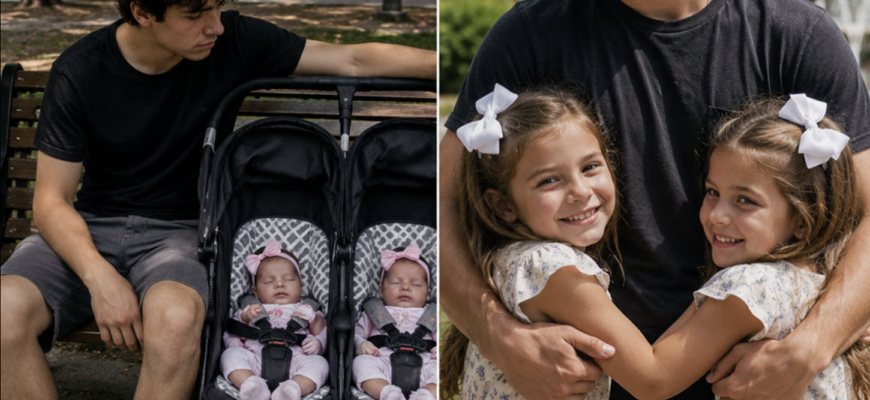
I never expected to raise two babies before I could vote, but life doesn’t always wait for you to be ready. When my mom walked out, I stepped up. Years later, she came back with a plan that could tear everything apart.
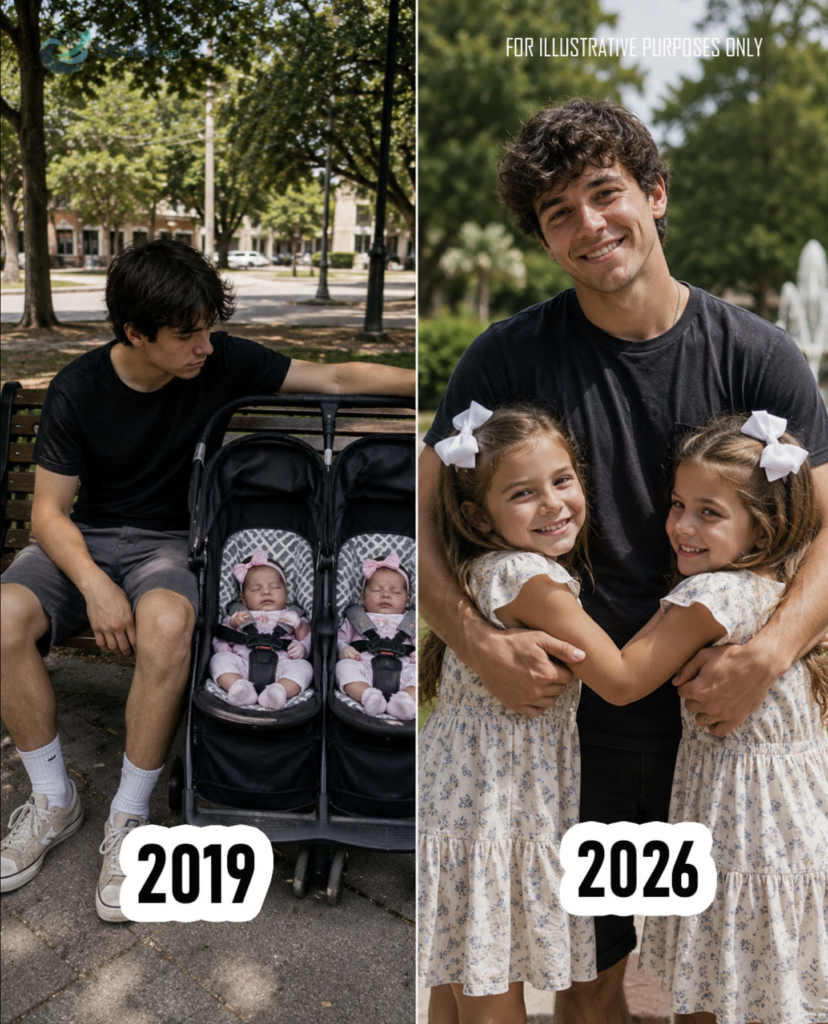
I’m 25 now. I never planned on becoming a dad at eighteen—especially not to newborn twins.
Back then, I was just a high school senior, living in a run-down two-bedroom apartment with my mom, Lorraine. She’d always been unpredictable—like a gust of wind, constantly changing direction. Some days she was sweet and nurturing. Other days, she acted like the world owed her a favor, and I was the one who’d collected the debt.
When she came home pregnant one day, I thought maybe—just maybe—it would ground her. Give her something to hold on to. But she was furious. At everything. The world, the man who left her, and mostly the fact that pregnancy didn’t bring her the attention she expected.
She never told me who the father was. I stopped asking after the second time she screamed at me to mind my own business. I still remember the way she slammed the fridge door that night, muttering about how men always vanished and left the women to clean up the mess.
When she gave birth to twin girls—Ava and Ellen—I was there. For two weeks, she pretended to be a mom. That’s the best way I can put it. She’d change a diaper and then vanish for hours. Or warm a bottle, collapse on the couch, and sleep through the crying. I tried to step in where I could, but I didn’t know anything. I was a kid myself, sneaking in homework between nighttime feedings, wondering if any of this was normal.
And then she disappeared.
No note. No phone call. Nothing. I woke up at 3 a.m. to a screaming baby and an empty apartment. My mother’s coat was gone, but everything else—her mess, her scent, her chaos—remained. I stood in the kitchen holding Ellen while Ava wailed from her bassinet, and a cold, sharp panic settled into my bones.
*If I fail them, they die.*
It sounds dramatic now, but it was the truest thought I ever had.
I didn’t get to decide whether to step up. It was never really a choice. I dropped the idea of joining the pre-med program—a dream I’d had since I was eleven, after watching a documentary about heart transplants with my grandpa. Now I was a father of two, with discarded college brochures sitting on my desk.
I stayed.
I worked whatever shifts I could get: warehouse by night, food delivery by day. I stacked boxes, drove through snowstorms, and picked up every extra shift because diapers and formula weren’t cheap. Rent also had to be paid. I learned how to ration groceries so that thirty dollars could last a week. I became good at finding secondhand clothes that looked new. I gave up my teenage years to become someone’s anchor.
People kept telling me to let the system handle it. But I couldn’t stand the thought of my half-sisters growing up in a stranger’s house, wondering why no one fought for them.
The girls started calling me “Bubba” before they ever said “brother.” It stuck. Even their preschool teachers used it. I’d carry them around the grocery store, one in each arm, and people would whisper behind me like I was some cautionary tale. But none of that mattered when they curled up on my chest during movie nights or drew stick-figure pictures of “me, my sister, Bubba, and our house”—as if we were the luckiest family in the world. They’d fall asleep on me, and I’d vow to myself: *They will never feel abandoned.*
For a while, I believed we were going to be okay—that we’d made it through the worst part.
And then, seven years later, Lorraine came back.
I remember it so clearly. It was a Thursday. We’d just gotten back from school when there was a knock on the door. I opened it without thinking. At first, I didn’t recognize her. Then my stomach dropped.
Lorraine used to look like she’d barely survived a storm—unwashed hair, cracked lips, thrift-store jackets. But the stranger at my door was polished. Designer coat, flawless makeup, perfect jewelry, shoes that probably cost more than a month’s rent. She tilted her chin as if smelling something bad and barely made eye contact.
“Nathan,” she said, like she wasn’t even sure that was my name.
Then she heard the girls’ voices down the hall, and her whole demeanor shifted. She softened, her lips curling into a fake smile. Her voice turned sweet, and she pulled out shopping bags from a luxury store I’d only ever seen on YouTube. The twins stopped in their tracks, staring at her like she was a ghost.
“Girls, it’s me… your mom… Look what I brought, babies!”
Inside the bags were things I could never afford: a tablet, a necklace, an expensive stuffed toy—things that had felt like pipe dreams to them and outright impossibilities to me. The girls’ eyes widened. They looked at each other, confused and hopeful at the same time. Because kids—no matter how much they’ve been hurt—still want their parents to be good. They still want to believe in the version of the story where their mom comes back, and everything finally makes sense.
I didn’t say much that night. I just watched. Smiled weakly.
Lorraine returned a few days later. Then again. She kept bringing gifts and showing exaggerated warmth. She’d take the girls for ice cream, ask about school as if she hadn’t missed years of it, and laugh too hard at their jokes like she was auditioning for a role she barely remembered. For a moment, I was numb, hoping maybe she wanted to mend things with the twins. But every time she left, I felt a sour twist in my gut, like the walls were closing in on me.
Soon enough, her real motives became clear.
The other shoe dropped with a thick white envelope with gold trim. Inside was a letter from an attorney—legal language, custody terms, cold phrases like “petition for legal guardianship” and “best interests of the minors.” My hands went numb as I read it.
She wasn’t here to reconnect. She wasn’t back because she missed her daughters. She wanted full custody.
I confronted her the next time she came by, before the girls were home from school. She walked in without asking and sat on the couch like she still lived there. I held out the letter, my hands trembling.
“What’s this?”
She didn’t flinch. She looked at me like I’d just asked for the salt. “It’s time I did what’s best for them,” she said. “You’ve done enough.”
“What’s best for them?” I could barely get the words out. “You left them. I raised them. I gave up everything.”
She rolled her eyes. “Don’t be dramatic. They’re fine. You managed. But I have opportunities now. Connections. They deserve more than this life.”
Then she said the thing that broke something inside me: “I need them.”
Not “I love them.” Not “I miss them.” Just *I need them*—as if they were possessions she’d left behind and now wanted to reclaim. Her tone was cold, businesslike.
“You need them for what, exactly?”
She adjusted her coat, bored. “You wouldn’t understand. I’m building a new life, Nathan. People want to see the comeback—the mother who beat the odds and reunited with her daughters. It’s inspiring. Sympathetic.”
I blinked. “So this isn’t about them. It’s about your image.”
“Call it what you want,” she said, standing up. “You can’t give them what I can.”
Just then, the front door closed. We both turned. The girls were dropping their backpacks on the floor. Lorraine froze. I did too. Ava’s eyes darted between us. Ellen instinctively stepped behind her sister, as if she could hide from the tension.
“Hi, babies!” Lorraine said, flipping back into that sickly-sweet tone.
But it was too late. They’d heard enough.
Ava’s face crumpled first. She started crying—not loud at first, just a low, shaking sound like something had cracked inside her. Ellen didn’t cry immediately; she just stared at Lorraine, her little hands balled into fists.
“You don’t want us,” Ellen said, her voice quiet but shaking. “You left us.”
Lorraine blinked. “Honey, that was a long time ago. I had to. But now I—”
“No,” Ava interrupted, tears streaming. “You left. Bubba stayed. Bubba takes care of us. You just bring stuff. That’s not the same.”
They were both crying now, talking over each other—saying things I hadn’t known they’d been holding in. *You didn’t come to my school play. You missed it when I got glasses. You don’t know us. Please don’t make us go with her.*
Then they ran to me and wrapped their arms around my waist, as if holding on tight enough would mean they never had to let go. Ava buried her face in my shirt and sobbed, “You’re our real parent.”
Lorraine’s face shifted. The warmth drained away, replaced by something else: annoyance. Embarrassment. Like we’d ruined her scene. She straightened her coat, glanced around the apartment as if it offended her, and looked me dead in the eye.
“You’ll regret this.”
Then she walked out. The door slammed so hard a picture frame fell off the wall.
That night, after the girls finally fell asleep—still clinging to me like their lives depended on it—I sat at the kitchen table and made a decision. I wasn’t going to just react or fight. She had a lawyer. Fine. I’d get one too.
I filed a case. Not out of spite, but because I knew the truth: I had raised these girls since the day they were born. I didn’t just want to keep custody—I wanted her held accountable. So I filed for full legal guardianship and retroactive child support.
The courtroom part was hell. Her attorneys arrived in slick suits with smug faces. They tried to spin the story—said I was emotionally manipulating the girls, that I was too young, that I’d deprived them of a relationship with their mother. That I was unstable, controlling, even jealous. It took everything in me not to yell. But I stayed calm.
I brought evidence: school forms, medical records, emergency room receipts from the time Ellen had a febrile seizure at 2 a.m. I presented statements from neighbors, teachers, even the elderly daycare manager, Miss Carol, who told the judge I was “the most devoted single parent she’d ever met.”
When the judge asked the girls what they wanted—carefully, in private—they told him. No hesitation. No confusion. They chose me.
The judge ruled against Lorraine.
The twins were mine—legally, emotionally, completely.
And here’s the part that still stuns me: Lorraine had to pay. The judge ordered monthly child support. Real support. No more surprise visits or conditional affection. Just a monthly check from her shiny new life to help provide for the children she abandoned.
After that, something inside me finally loosened. I wasn’t white-knuckling everything anymore. I dropped one of my jobs. I slept. I ate real meals. I laughed more.
And then something strange started to happen. The dream I’d buried began whispering again. Late at night, after the girls were asleep, I found myself scrolling college websites on my phone—nursing programs, part-time pre-med tracks. Not because I thought it was possible, but because I still wanted it.
One night, Ellen caught me. She climbed into my lap, still in her pajamas, and looked at my screen. “Is that doctor school?”
I laughed. “Kinda. It’s just a ‘maybe.’”
She looked at me, serious. “You’re gonna do it. You always do what you say.”
Ava came in behind her. “We’ll help. You helped us. Now we help you.”
I didn’t even try to hide the tears. I turned my face into Ellen’s shoulder and let them fall.
So that’s where we are now.
I’m 25. I’m a dad to two incredible girls who’ve taught me more about love and resilience than any book ever could. I’m working part-time and taking night classes, clawing my way back toward that old dream with tired hands but a full heart.
Lorraine hasn’t shown up since the court order. Occasionally, a check comes in the mail with no note—just a signature. I don’t say anything to the girls about it. I cash it, pay the bills, and move on. Her name isn’t mentioned anymore. And when it is, it’s in passing.
I don’t feel angry. Not anymore. She wanted to use them as props in her perfect little redemption arc. But instead, she gave me the one thing I didn’t have before: proof that I was enough. That I had built something real. That even when it felt impossible, I never let go.