Trabalhava há cinco anos numa casa de repouso. Adorava o meu trabalho. Verdadeiramente. Havia algo de especial em ajudar os idosos.
Jogávamos Xadrez, cantávamos canções desde a juventude e, por vezes, fazia pequenos piqueniques no jardim com colchas velhas e copos plásticos de limonada. Entre os moradores havia um homem em particular chamado Eliot. Apenas Eliot. Nunca mencione o seu segundo nome. Ele odiava isso.
«Adicione’ senhor ‘ mais uma vez e eu vou começar a cobrar o aluguel por cada sílaba.”
Tornámo-nos amigos quase imediatamente. Eliot era de língua afiada, sempre pronto com uma observação. «Meias azuis hoje, Jane? Isso é azar.”
De qualquer forma, quando eu estava saindo, ouvi-o murmurar atrás de mim:
«Se não fosse por você, este lugar seria insuportável.”
Nunca ninguém o visitou. Nunca. Perguntei-lhe uma vez, talvez duas vezes … tudo bem, talvez uma dúzia de vezes ao longo dos anos:
«Eliot, você não tem família alguma?”
«Nenhum. Nunca o fiz. Sou só eu.”
«E os amigos?”
Ele riu, o tipo de risada amarga.
«Oh, querida … os amigos desaparecem um a um a cada ano. E então, uma vez que você é inconveniente, todos eles vão de uma vez.»Mas o que mais me intrigou nele foram as cartas.
Todos os sábados, precisamente às nove, sentava-se à sua secretária e escrevia lentamente, em silêncio, como se rezasse. Em seguida, selou-o num envelope, escreveu algo na frente e colocou-o no parapeito da janela.
«Lembra-me da caixa de correio mais tarde, Jane. Tenho de o deixar cair em mim. Pessoalmente.”
«Eu poderia enviá-lo para você, você sabe.”
«Isto é importante. Por favor, não voltes a perguntar.”
Então, não o fiz, mas … sou uma mulher. A curiosidade vive nos meus ossos. Sua caixa de correio permaneceu dolorosamente vazia, semana após semana. E uma manhã, eu simplesmente não pude evitar.
Quando Eliot saiu da sala e a carta sentou-se sozinha no parapeito, troquei-a por um envelope idêntico. As minhas mãos tremiam. Mas consegui.
Pela primeira vez em dois anos, finalmente soube o nome e a morada.
«Para E. H. Para Sempre seu amigo, Eliot.”
E. H.? Esse nome mexeu com alguma coisa. Familiar.
O endereço era uma pequena cidade a cerca de uma hora e meia de distância. Eu sabia então e ali — eu tinha que ir.
Talvez eu pudesse encontrar alguém que ainda se lembrasse dele. Alguém que possa finalmente responder.
***
Toda a manhã, andei com aquela carta a queimar um buraco no bolso.
Não conseguia concentrar-me em nada. Então, quando chegavam os fins-de-semana, enfiei a carta na minha mala e saí como um adolescente a esgueirar-me para além do toque de recolher.
Dirigi com as duas janelas abaixadas, deixando o vento emaranhar meu cabelo. Esse endereço… devo tê-lo lido uma dúzia de vezes a cada sinal vermelho.
«Por que é que esse nome de rua se parece com uma dor de cabeça?”
Finalmente cheguei à morada. Meu coração estava batendo forte como se eu estivesse prestes a confessar um crime. Um homem mais velho abriu a porta.
«Posso ajudá-lo?”
«Oi … desculpe incomodá-lo. Eu … isto é um pouco estranho….”
Ele levantou uma sobrancelha e soltou uma pequena risada.
«Estranho, não é? Bem, estás com sorte. Odd é a minha especialidade.”
«Em… Eu trabalho em uma casa de repouso, e um de nossos residentes tem enviado cartas aqui. Durante anos. Eu só…»
He frowned, then turned and called out,
“Marlene! You gotta hear this.”
A woman appeared behind him with a bowl of cookie dough. I handed over the envelope. He glanced at it, then stepped aside.
“Come on in. You might want to sit for this.”
They explained that the house had belonged to someone else decades ago — a woman who sold it to their parents.
“I always figured they were junk mail or ads. But we did keep the handwritten ones.”
The woman disappeared into the hallway and came back with a shoebox. Inside were dozens of envelopes.
“I couldn’t throw them out. They felt… important.”
I don’t know what I expected, but seeing all those letters made my throat tighten.
I thanked them and stepped back out into the soft afternoon light. Something about the place tugged at me. Then I drove past an old, rusted sign on the side of the road.
“Luna Park. Closed.”
And suddenly, I froze. It was in one of my baby photos. I was sure of it.
But how?
I had to see those old photos! The ones my mom kept locked away in her closet.
I turned the car around. It was time to find out what else I didn’t remember.
***
I hadn’t been at Mom’s place in months. She lived in a cozy bungalow two towns over. I barely turned the key in the door when I heard her voice float in from the kitchen.
“You’re early. You only visit me this fast when your heart’s broken.”
“Neither. But you were right. I do need something.”
“Should I be scared?”
“Only if you’ve been hiding something.”
She gave me a look. That classic, sharp, motherly squint. I followed her into the kitchen.
“Remember those baby albums you keep locked up like a national treasure?”
“The ones you always try to sneak into your purse when I’m not looking? Yes.”
“Mom, don’t start.”
“You can look at them here.”
I raised both hands in surrender.
“Fine. Just… let me see them. Please.”
She opened the hall closet and pulled out a dusty box marked “Emily – 1990-1995.” I sat on the floor like a kid again, flipping through page after page.
And there it was.
A photo of me. A chubby one-year-old, sitting on a carousel horse. And behind me, clear as day… that sign: “Luna Park.” My hands shook.
“Mom… where was this taken?”
She glanced over, casually at first. But then her expression changed.
“Oh. That must’ve been before we moved.”
“Moved from where?”
“From another town. You were just a baby. We didn’t stay long.”
I looked at the photo again. Then I pulled the envelope out of my bag. The one addressed to E.H.
“I found these letters. Dozens of them. At that same house. The one you’re looking at now. In the photo. Here.” I pointed with my finger.
Mom didn’t say anything.
“Mom… the initials. E.H. That’s you, isn’t it? Emily H****r. It matches.”
“Lots of people have those initials. Don’t be dramatic.”
“You knew Eliot, didn’t you?”
“That’s enough.”
“Just tell me the truth. Who was he?”
Mom turned to the sink, slamming the spoon down.
“Let it go.”
“I can’t. I saw the way you looked at that photo. You remember everything. And you’re hiding something.”
She gripped the edge of the counter. Her shoulders tensed.
“I was young. It was complicated. That man… he…”
She turned, face flushed.
“He left! He left without a word. I waited for months. I was pregnant and alone. What was I supposed to do?!”
I looked at my Mom. My voice came out in a whisper.
“Eliot… is he my father?”
Her jaw clenched. For a second, she didn’t breathe.
“You told me he died!”
“I lied! What kind of mother tells her daughter her father ran off and vanished?!”
“But Mom, I had the right to know…”
“Oh, you had the right? I raised you alone. I worked double shifts, wiped your tears, and celebrated every birthday. So yes, I decided what rights you had!”
“He’s old now. Alone. He thinks he has no family…”
“That’s on him!”
“But you don’t know why he left! You know, you’re not exactly easy to deal with either.”
“Goddammit, Emily. That’s enough! Take the photos and get out before I say something I’ll regret.”
“He wrote you dozens of letters! You need to talk to him. You’ve been alone all your life for a reason, right?”
“OUT!”
“But Mom…”
“You wanted a father? Well, congratulations. You found him. But don’t you dare drag me into this story.”
“Come on, Mom…”
But she’s already gone. The bedroom door slammed so hard that the picture frames rattled on the walls. I stood there, holding the photo in my hands. Just the day before, Eliot was the lonely old man I made tea for.
And finally, he became the man who walked away from a pregnant woman. Whatever happened, I had to know the truth.
But what will I even say? Does he even know… that he has a daughter?
The answers were probably in those letters. But they were meant for Mom, not for me.
So I just left them on the table.
And walked out.
***
I walked into the nursing home exactly as I always did: badge clipped, hair tied back, sneakers squeaking on the tiles. Routine made everything easier to bear. Even that.
Eliot was sitting in his usual chair, poking at a stale cookie like it had personally insulted him.
I knocked lightly on the doorframe and smiled.
“You’ve got a visitor today, Eliot.”
He didn’t even look up.
“A visitor? What, is it my parole officer? Or did someone finally dig up my long-lost fortune?”
“Nope. A real one. I’ll go get them.”
“Hope they brought real cookies, not this shit.”
In the locker room, I peeled off my scrubs and pulled on a soft dress. When I stepped inside again, Eliot didn’t glance up.
“Took you long enough. And what’s with the dress? You think this is prom night?”
I sat down across from him. His eyes flicked up and finally locked on mine.
“I’m your visitor, Eliot.”
He leaned back slightly, suspicious.
“What’s this, some kind of intervention? Is this about the chocolate I keep under the bed?”
I almost smiled. “No. It’s about the letters. The ones you write every Saturday. I… I read one.”
“You what?!”
“I know I had no right. But I found her. The woman you were writing to all this time. E.H.”
“That’s not your business. You don’t just take things that don’t belong to you! That’s…”
“I know, and I’m sorry. But I thought maybe I could find someone who would care about you.”
“Well, you did. My dear Emily. Congratulations. You found her. Now what? Gonna drag me there so she can ignore me in person?”
“She never got them. The house was sold. The letters came after she left. Some probably never made it at all. That woman… she’s my mother.”
“And you…”
“I’m your daughter.”
Eliot leaned forward, hands trembling.
“You’re my…”
“And she said YOU left. That you went away and never came back.”
“I was called to serve. I wrote to her. Every week. When I came home, she was gone. No note, no trail. Just… gone.”
“The letters you sent earlier — they’re not in the box.”
He looked down at his hands again, then at me.
“You look like her.”
And just as I was about to answer, the door creaked. We both turned. My mother stood there in the doorway, her eyes already brimming with tears.
“I wasn’t going to come. But then I’ve read your letters.”
Eliot stood. Slower than usual. “I waited for you.”
“Now I know.”
I didn’t move. I just watched. Mom and Dad. My voice cracked as I whispered,
“Can we just… finally hug each other?”
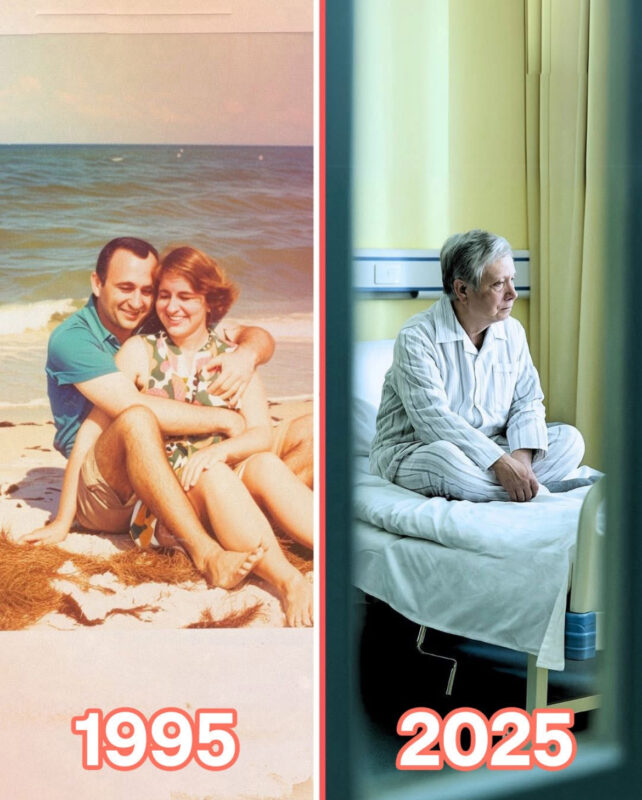
We stood there for a long time, arms wrapped around one another, heads resting on trembling shoulders. No one spoke. Each of us cried in silence. Thirty years had slipped through our fingers.